Social Engineering: Why Smart People Fall for Scams?

Every day you hear about digital fraud, bank account hacks, fake job offers and scary scam calls. A lot of these are not just technical hacks. The trick often starts with your trust, your reaction, your instinct to help. That’s exactly where social engineering comes in.
Social engineering is the art of manipulating people into giving up confidential information. While traditional hacking targets software vulnerabilities, social engineering targets the human element.
Scammers exploit your trust, fear, or curiosity to bypass the most expensive security systems in the world.
Think of it as a “digital con job.” Instead of breaking the lock, the thief convinces you to hand over the keys yourself. In simple words, social engineering is when fraudsters break human trust and use psychology to steal money, data or access.
To understand social engineering, you have to stop looking at it as a “hack” and start seeing it as a scripted performance. The scammer isn’t just asking for money; they are building an alternate reality where you feel you have no choice but to comply.
How Does It Work?
Social engineering is psychological manipulation. Scammers study how you think, behave and react under stress. Then they design a story that sounds familiar and urgent so you act before you verify.
This isn’t about hacking your phone remotely. It’s about influencing your decisions, so you willingly give away information.
It works because it plays on basic human emotions.
They use fear (“You are under investigation!”)
They use urgency (“Your bank account will be frozen!”)
They use authority (“This is from the Supreme Court/CBI/Bank Security team.”)
They use familiarity (“I’m your relative, please help!”)
They use reward (“You won ₹10 Lakh Lottery”)
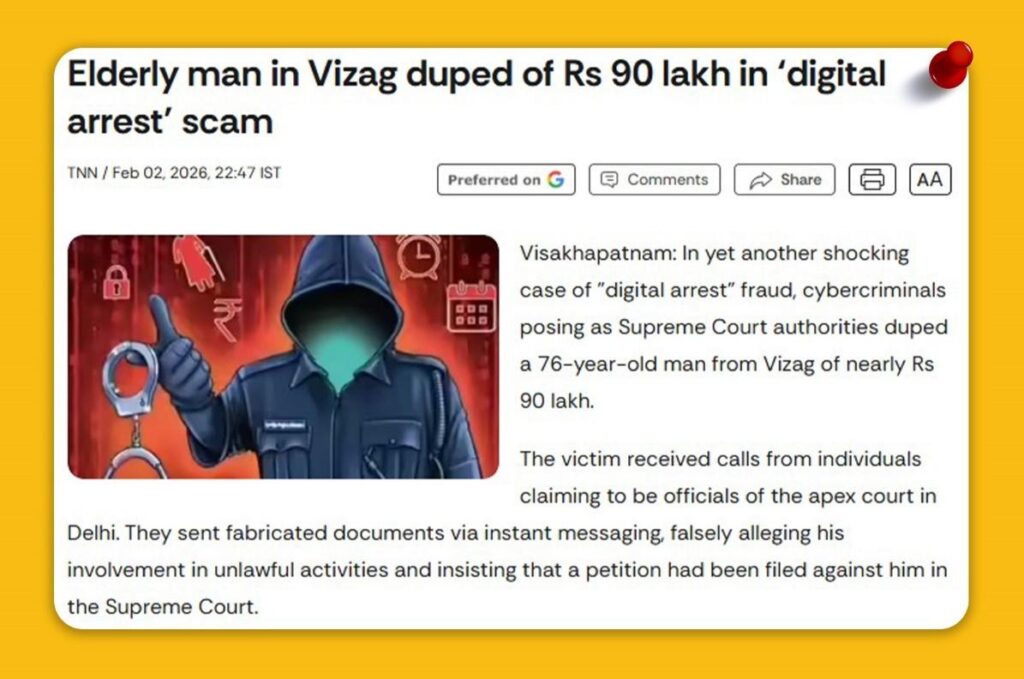
Take an example of a 76-year-old man in Visakhapatnam. He was told he was under “digital arrest” by fake Supreme Court officials. They showed forged documents and even staged a video call with someone posing as a CBI officer. The man ended up transferring nearly Rs. 90 lakh to bank accounts they controlled. Police said no official ever asks for money in such a way.
This is classic social engineering where fraudsters pretend to be an authority figure and push you to act immediately.
Recently, a woman in Pune was offered a “part-time job” via WhatsApp promising easy commissions for simple tasks. After transferring money to participate, she was later asked to deposit more before withdrawal and ended up losing Rs. 20 lakh.
Fraudsters sometimes impersonate friends or relatives on messaging apps or calls. They may even clone voices or build fake profiles to gain your trust before asking for money or sensitive info.
Reports show India facing a sharp rise in deepfake and impersonation scams that trick victims into believing calls or messages are from real people.
How To Be Safe?
You might think, “I’d never fall for that.”
But social engineering is designed to strike when you are at your most vulnerable, like tired after work, distracted by kids, or worried about your reputation. It’s not about intelligence; it’s about emotional hijack.
The moment you feel a surge of panic or the need to act right now, that is your cue to stop.
Literally hang up the phone. Even if they say you’ll be arrested. Give your brain 60 seconds of silence. The “emergency” almost always disappears when the scammer isn’t in your ear.
If a call involves a crime, go to the nearest local police station in person. Scammers will never follow you there.
Social engineering works because it feels personal. By staying skeptical and recognizing these patterns, you can keep your hard-earned money safe.
By understanding how scammers operate and what tactics they use, you reduce your risk of becoming a victim. Stay vigilant, verify before you act, and protect your finances and personal information.
Imagine you receive a call from a courier company executive. The caller says a package sent in your name to Thailand was seized. It contains unaccounted cash or some amount of drugs.
Before you can even process this, they “transfer” you to the Mumbai Cyber Cell. A person picks up, sounding like they are in a busy office. They address you by your full name and Aadhaar number.
They tell you that you are a prime suspect in a money laundering case linked to a known criminal. They order you to stay on a video video call and tell nobody—not even your spouse—because “the line is being monitored for national security.”