There was a time when seeing something meant, at least to some extent, believing it.
A photograph was considered evidence. A video recording could settle an argument. If someone sent you a voice note, you could recognise the person speaking and make a reasonable judgement about whether the message was genuine.
That assumption is becoming increasingly difficult to maintain.
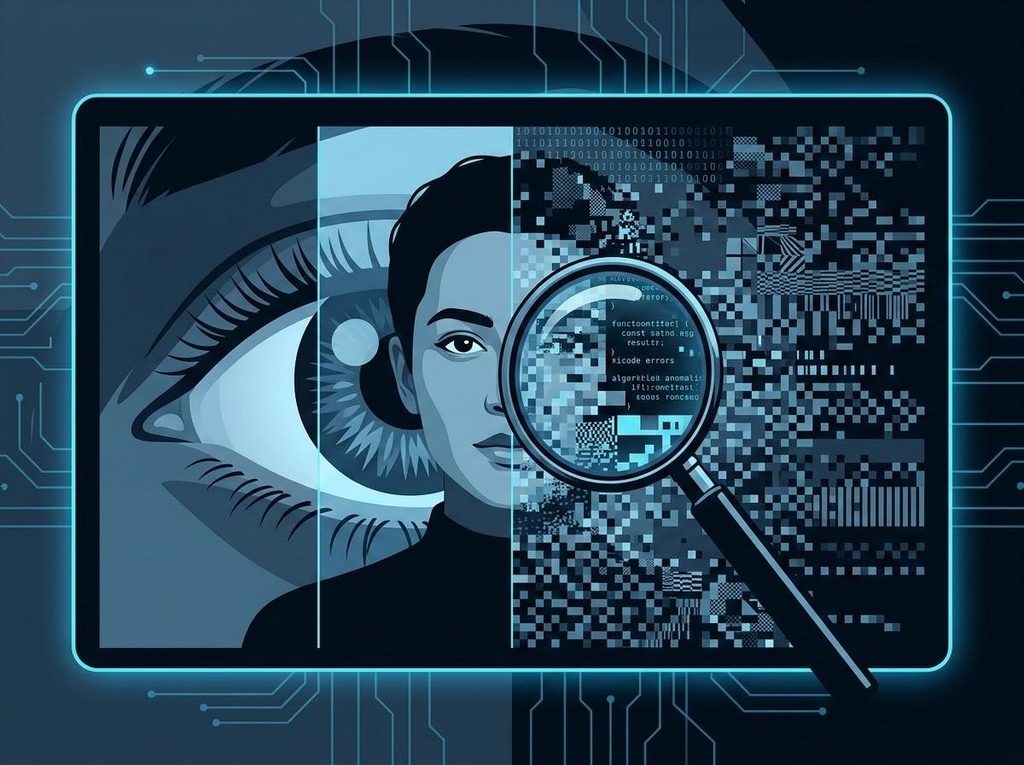
Artificial intelligence has changed the way content can be created, edited and distributed. Today, a photograph can be generated without a camera. A person’s voice can be recreated from a short audio sample. Someone can appear to say something they never said. A video can show an event that never happened.
None of this means that we should stop trusting everything we see and hear. But it does mean that we need to change the way we decide what deserves our trust.
This is where media literacy becomes increasingly important.
When Seeing Is No Longer Believing
For years, misinformation largely depended on manipulating existing content. Someone might take an old photograph and claim that it was taken during a recent event. A genuine video could be given a misleading caption. A newspaper clipping could be edited before being circulated on WhatsApp.
AI adds another layer to the problem.
Generative AI tools can now produce remarkably convincing images, videos and audio. Some of these creations are obvious. Others are good enough to fool people who have no reason to suspect that anything is wrong.
Consider a simple example.
A photograph appears on social media showing a huge crowd gathered outside a government building. The caption says that thousands of people have gathered to protest a newly announced decision.
The photograph looks real. There are people, buildings, shadows and signs. It may even appear in several different posts.
But none of that establishes that the photograph is genuine.
The image may have been generated using AI. It may be an old photograph from another country. It could be a real photograph that has been digitally altered. Or the picture could be genuine while the caption attached to it is completely false.
The important lesson is that authenticity and context are two different questions.
Deepfakes Are Only One Part of the Problem
When people hear about AI misinformation, they often immediately think of deepfake videos.
Deepfakes are certainly a serious concern, particularly when they involve public figures, political leaders, celebrities or other people whose statements can attract large audiences.
But focusing exclusively on deepfakes can actually make media literacy harder.
Misinformation does not need sophisticated technology to be effective.
A misleading headline can cause as much confusion as a manipulated video. A genuine photograph with a false description can travel farther than a technically impressive deepfake. A fabricated screenshot of a news report can be created in minutes without advanced knowledge of AI.
In many cases, technology is not even the most important part of the deception.
The real problem is the story surrounding the content.
People rarely share an image simply because it is visually interesting. They share it because the image appears to confirm something they already believe, provoke anger, create fear or generate excitement.
That emotional reaction is what makes misinformation powerful.
The Rise of Synthetic Voices
Another emerging challenge is voice cloning.
Imagine receiving a phone call from someone who sounds exactly like a family member, colleague or public figure. The person asks you to urgently transfer money or share sensitive information.
Would you question the voice?
Many people would not.
Voice cloning makes this problem more complicated because our voices are deeply connected with identity. We are accustomed to recognising people by how they sound.
But a familiar voice is no longer sufficient proof of identity.
This has implications far beyond scams. A fabricated audio clip can be used to falsely attribute statements to politicians, journalists, activists, business leaders or ordinary citizens.
The solution is not to become suspicious of every voice note. It is to develop a simple habit: important claims should be verified independently.
If someone supposedly asks you to take an unusual action, contact them through another channel. If a politician supposedly made a controversial statement, look for credible reporting or the person’s verified communication channels. If an audio clip makes an extraordinary claim, don’t treat the recording itself as proof.
Why People Believe AI-Generated Content
It is tempting to think that people fall for misinformation because they are careless or uninformed.
The reality is more complicated.
Human beings naturally rely on shortcuts when processing information. We don’t have the time or ability to investigate every photograph, video, message and headline we encounter during the day.
We use signals.
Does the person who shared it seem trustworthy? Does the information match what we already believe? Have several people shared it? Does the image look professional? Does the story make emotional sense?
These shortcuts are useful in everyday life.
The problem begins when someone deliberately exploits them.
A false post saying, “You won’t see this on mainstream media” may appear more credible precisely because it creates the impression that the reader is discovering something hidden.
A dramatic photograph may feel convincing because the visual evidence seems immediate.
An AI-generated video may appear authentic because it contains the facial expressions, background and voice patterns that we associate with real recordings.
In other words, misinformation doesn’t succeed simply because technology is getting better.
It succeeds because humans are human.
What Media Literacy Looks Like in the AI Era
Media literacy cannot simply mean teaching people how to spot six visual signs of an AI-generated image.
Those signs change.
AI tools improve. Editing software becomes more sophisticated. The obvious visual errors that once revealed generated images may disappear.
Instead, media literacy needs to focus on a broader set of questions.
Before believing or sharing something, ask:
Who created this?
Do we know the original source?
Where did it first appear?
Is this actually a recent piece of content, or has an old image been presented as new?
What evidence supports the claim?
Is there independent reporting or documentation?
What might be missing?
Does the content show the complete situation, or only a carefully selected fragment?
Who benefits if I believe this?
This last question is particularly useful.
Misinformation often has a purpose. It may be designed to generate clicks, sell a product, influence public opinion, damage someone’s reputation or simply create engagement.
Understanding the possible motivation behind content can help us evaluate it more critically.
Don’t Become a Digital Cynic
There is another danger in the age of AI: assuming that everything is fake.
If people begin to believe that photographs, videos and audio can never be trusted, we haven’t solved the misinformation problem. We have created a different one.
Journalism depends heavily on evidence.
Videos document human rights violations. Photographs record disasters. Audio recordings can expose wrongdoing. Citizen-generated content can provide information when professional journalists cannot reach a location.
The answer is therefore not “trust nothing.”
It is trust responsibly.
A healthy media-literate person is neither completely trusting nor completely cynical. They are willing to believe information when there is sufficient evidence and willing to pause when something doesn’t add up.
The Responsibility of Platforms and Newsrooms
The responsibility for dealing with AI misinformation cannot fall entirely on individual users.
Technology platforms also have an important role.
Users need clearer information about manipulated or synthetic content. Platforms need effective systems for responding to harmful deception. News organisations need strong verification processes before publishing material that could influence public opinion.
Journalists face a particularly difficult challenge.
AI can be used to manufacture fake evidence, but it can also be used by journalists to investigate and verify information. The same technology that creates synthetic media can potentially help identify it.
This makes human judgement more important, not less.
A journalist cannot simply assume that software has provided the correct answer. Verification remains a process involving context, sources, corroboration and editorial judgement.
A New Definition of Evidence
Perhaps the biggest change brought by AI is that we need to rethink what we mean when we say, “I saw it myself.”
Seeing something on a screen is not necessarily the same as witnessing an event.
The screen is a medium. The content has travelled through people, platforms, algorithms and technologies before reaching us.
That does not make the content false.
It simply means we need to understand the journey it has taken.
The question is no longer just, “Does this look real?”
It is:
Where did this come from, what evidence supports it, and can I independently verify it?
That shift may seem small, but it is fundamental.
AI is changing how easily information can be created. Media literacy must change how carefully information is consumed.
The future will probably contain more synthetic content, not less. That does not have to mean a future where truth becomes impossible to identify.
It means we will need better habits.
Pause before sharing. Check the source. Look for context. Compare independent reports. Question extraordinary claims. And, perhaps most importantly, accept that being fooled once does not make someone unintelligent.
In a world where machines can increasingly imitate reality, critical thinking is becoming one of our most valuable forms of protection.