
Learn simple physics to tell if an image is AI-generated, spotting inconsistencies even as AI improves.
A few years ago, spotting a fake image online was relatively easy. Faces looked distorted, hands had extra fingers, and backgrounds appeared messy. But today, AI-generated images have become frighteningly realistic.
So how can you tell if an image is fake?
According to Hany Farid, one of the world’s leading experts in digital forensics, the answer may lie in something surprisingly simple: physics.
Farid, a professor at the University of California (UC) who has spent more than two decades studying manipulated images, says AI systems still struggle to understand how the real 3D world works.
In a detailed article published in Science Magazine, Farid explained that AI generators often fail basic tests involving geometry, light, shadows, and reflections.
The final image may look convincing at first glance. But when you slow down and examine it carefully, small mistakes begin to appear.
Incorrect Geometry
One of the easiest things to check is the geometry of the image.
Think about standing on a long road or looking at railway tracks. Even though the tracks are parallel in real life, they appear to move closer together in the distance until they meet at a single point.
Artists and architects have used this trick for centuries while drawing realistic scenes. This point is called a vanishing point.
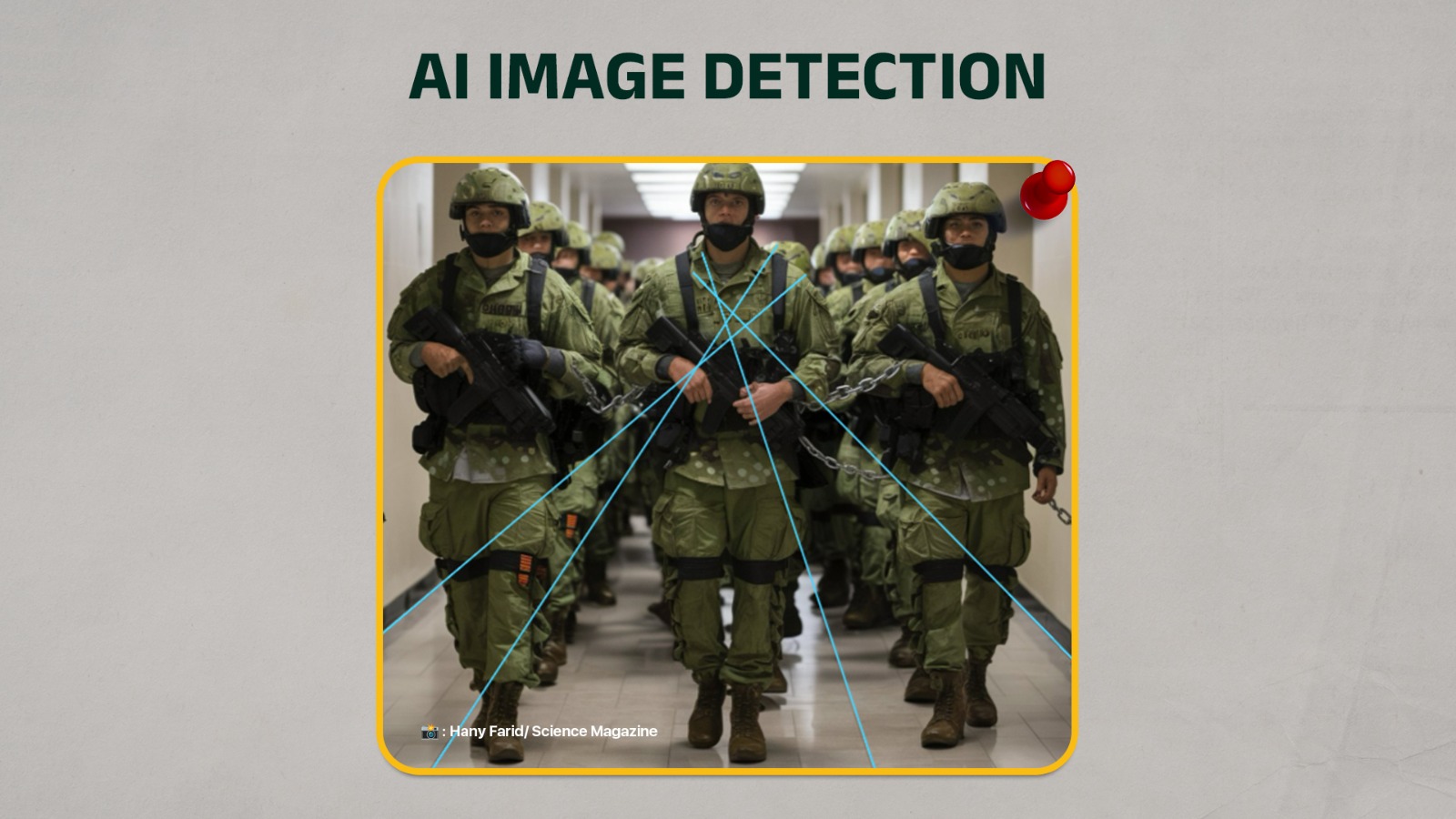
Image Credit – Hany Farid
In real photographs, parallel lines usually follow this rule perfectly. Floor tiles, walls, roads, windows, and buildings all align toward the same point.
But AI-generated images often break this rule. The lines simply do not agree with each other.
Farid says this happens because AI is not building a true 3D scene.
Flawed Reflections
In real life, mirrors follow strict geometric rules. If you see a person standing in front of a mirror, the reflection should match the position, angle, and distance of the real object.
But AI often gets reflections wrong.
Farid explains that if you draw imaginary lines connecting points on a real object to matching points in its reflection, those lines should also follow proper perspective and converge naturally. In many AI-generated images, they do not.
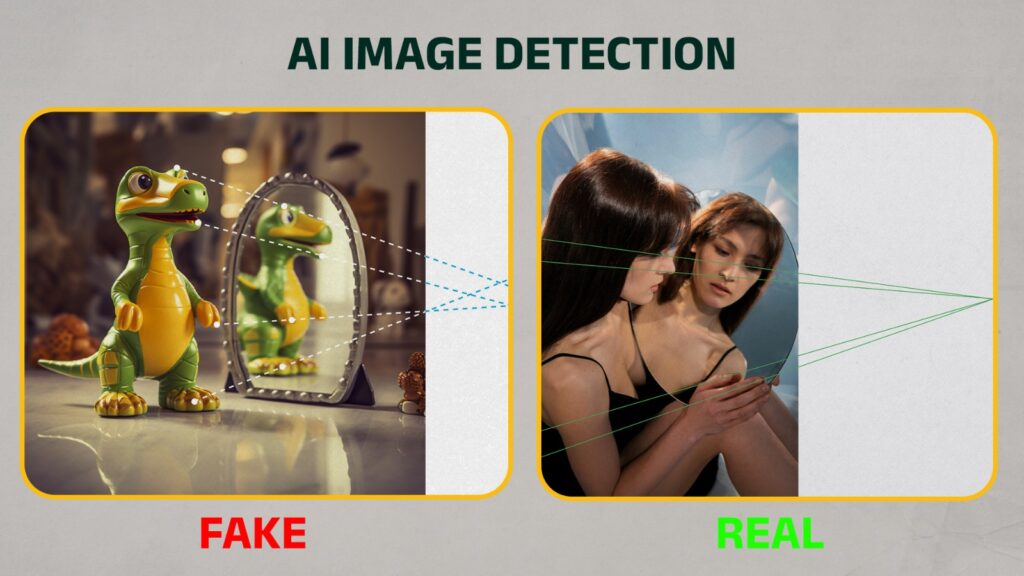
Image Credit – Hany Farid
Inconsistent Shadows
In AI-generated images, these lighting mistakes happen frequently. Shadows may appear too long, too short, or completely disconnected from the object creating them. Sometimes multiple light sources seem to exist even though the scene shows only one Sun.
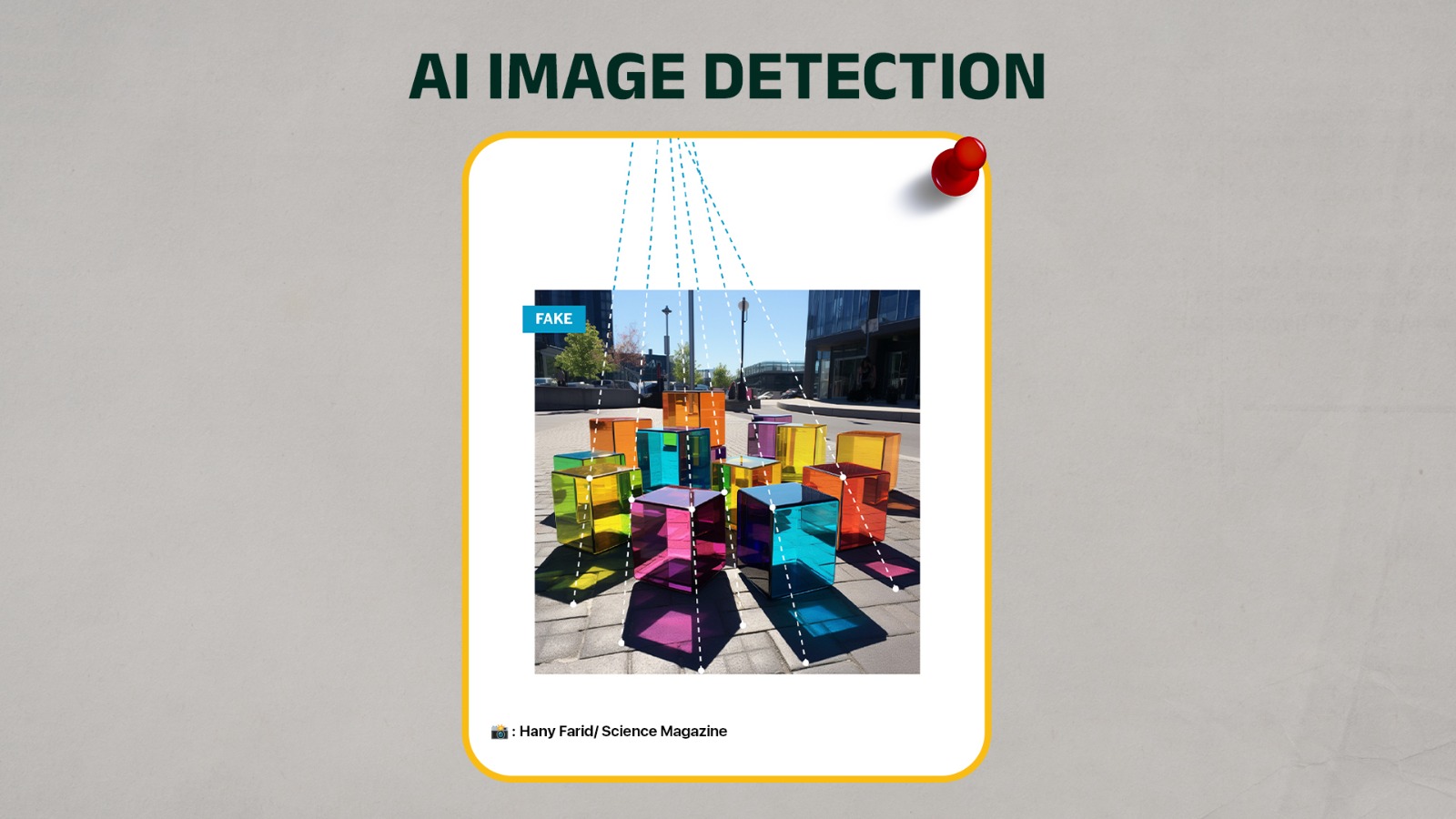
Image Credit – Hany Farid
Interestingly, Farid believes AI companies are not very concerned about perfecting these physical details because most users never notice them. The average person looks at the main subject of an image, not the shadows in the corner or the direction of floor tiles.
That is exactly why these clues remain useful.
Farid’s work shows that spotting fake images is not always about advanced software or technical tools. Sometimes it simply requires slowing down and observing the world carefully.
The next time you see a shocking image online, do not react instantly.
Look at the lines.
Look at the reflections.
Look at the shadows.
Human eyes often ignore these small details during quick scrolling. But once you start looking carefully, the mistakes become easier to notice.